|
|
German U-Boat Activity In Finnish Territorial Waters 1930's - 1940's |
|

|
Introduction Very little information has been published regarding the German U-Boat activities in and around Finland in the year 1944. The following, attempts to describe this activity with information describing the Finnish submarine program and the subsequent involvement of German U-Boats in Finnish waters.
Between 1920 and 1921 the transitional German Navy became a permanent service once again and regular exercises and visits abroad were arranged. Though new construction was limited due to the high inflation rate then in progress, treaty evasion continued; orders were even placed for submarines to be built in Spain and Finland. The years from 1920 to 1924 marked the rebirth of the German Navy, but it was in the next period, from 1925 to 1932, that serious reconstruction was started. The building of U-boats abroad continued and crews for them were trained under the guise of receiving anti-submarine instruction. ....Following his rather unsuccessful negotiations with Argentina, Korvetten- kapitan
Karl Bartenbach (former head of the U-Boat Flotilla in Flanders) had been Naval Adviser to Finland since 1924,
and had taken pains to persuade the Finns to have submarines built to IvS (N.V. Ingenieurskaantor voor Sheepsbouw
- Holland) designs. His initiative was rewarded in 1926, when the German Navy received a contract for 3 torpedo-armed
minelaying submarines, similar to the IvS design for Pu89, to be built by the Crichton- Vulkan Shipyard at Abo
(now Turku) in Finland. In contrast with the German UC boats of the First World War, the mines would be carried
in wet storage, in shafts next to the pressure hull; this enabled submerged torpedo tubes to be fitted forward
and aft. With this design, IvS achieved an operationally sound U-boat type, which greatly exceeded the Type UCIII
in handling properties without requiring larger surface displacement. |

|
The Germans Make A Move... |
|
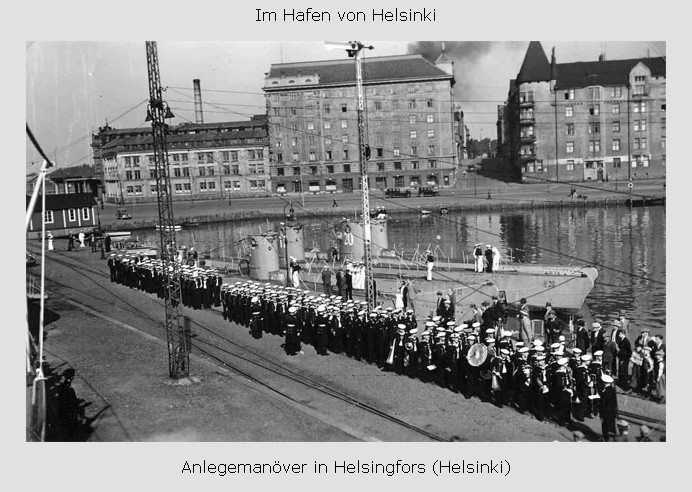
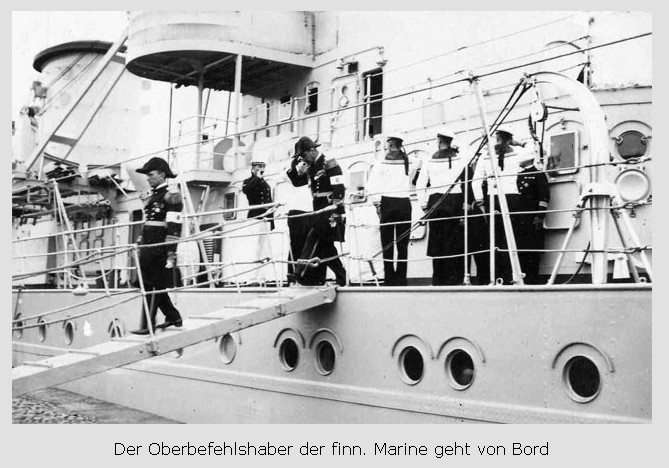
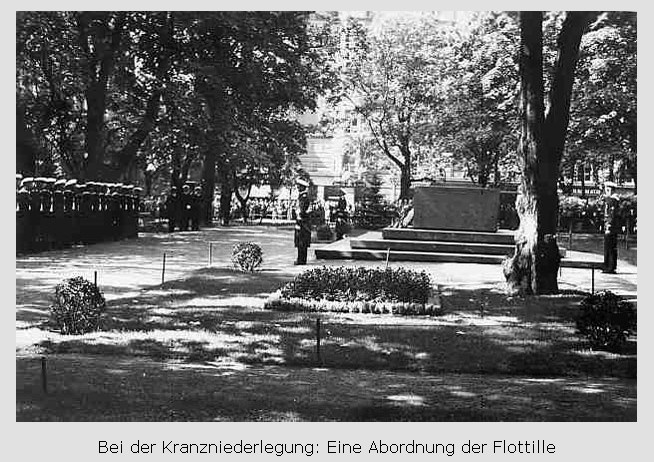
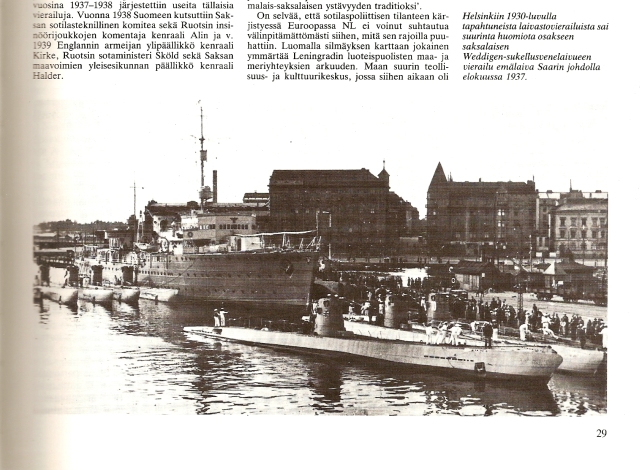
The "Weddingen" Flotilla visits Helsinki
(click on small images below to enlarge)
|
||||||||||||||||



|
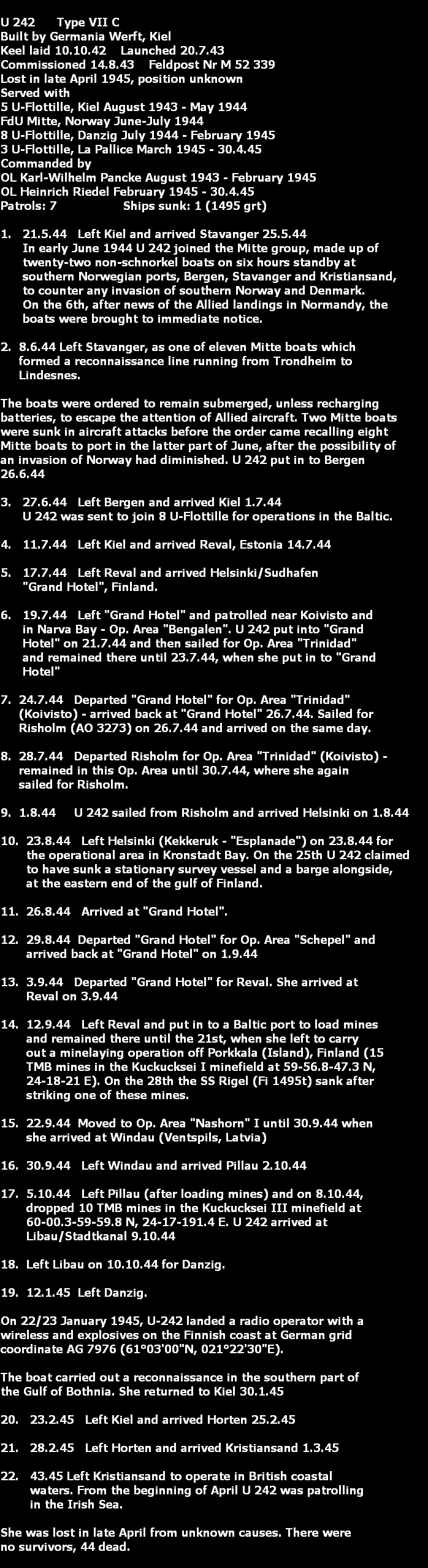
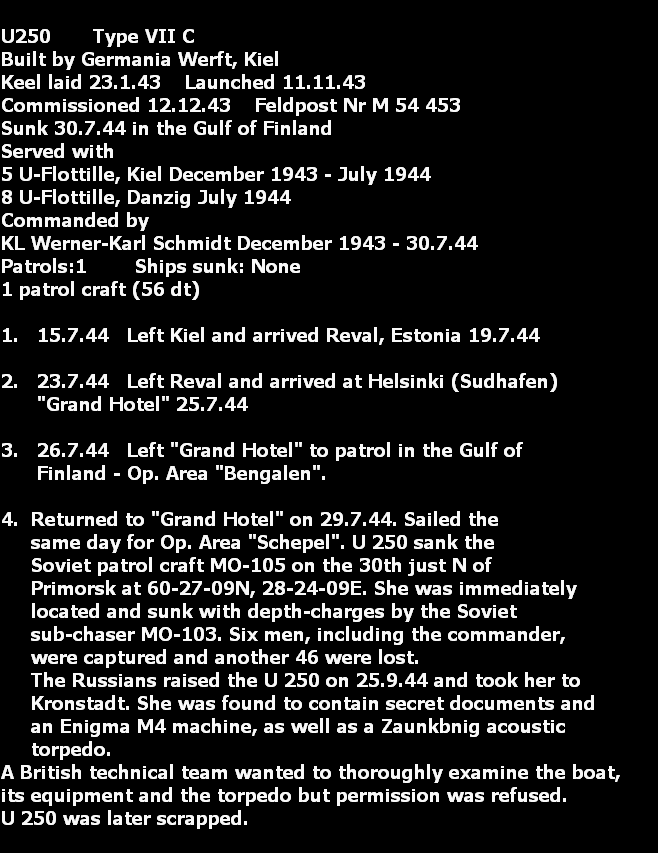
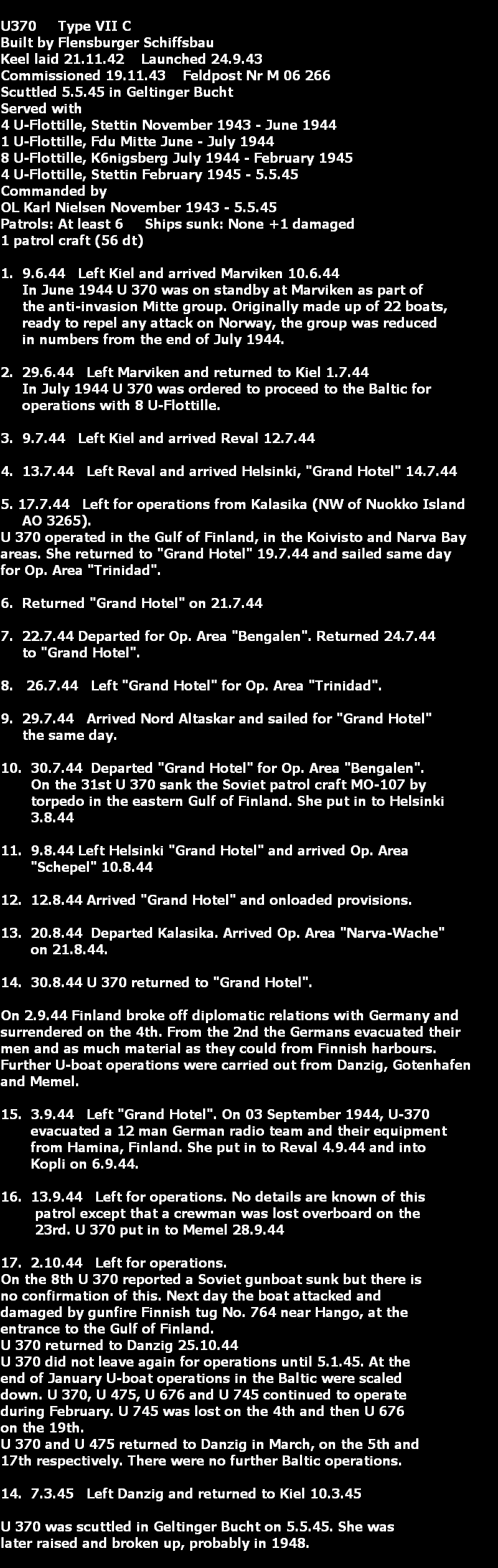
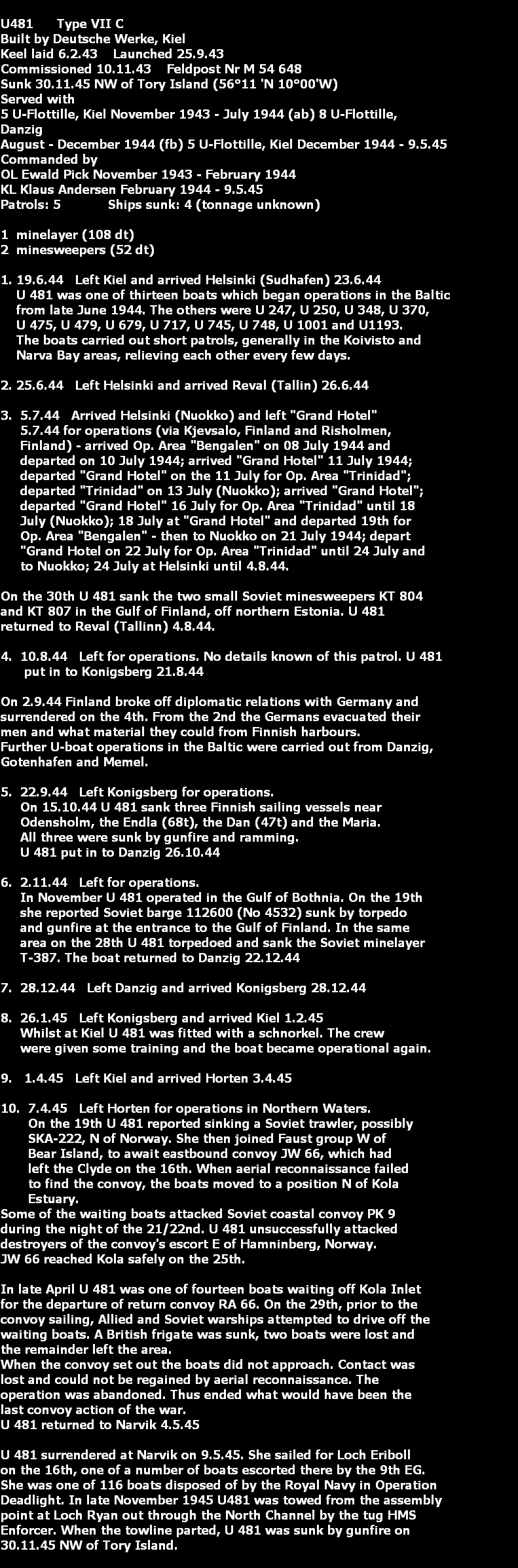
The "Badewanne" (Bath tub) U-Boats In the middle of summer 1944 German submarines arrived to Gulf of Finland. Finnish and German submarines are employed in the inner part of the Gulf of Finland because of the critical situation in Karelia. The three large Finnish boats operate from the middle of June south of Koivisto and the two small boats near Tiurinsaari. "Vesihiisi" lays mine barrages near Peninsaari on 4 and 7 July; "Vetehinen" lays a mine barrage after two sorties into Koivisto Sound on 2 July and again on 5 July. "Iku-Turso" operates en route to Lavansaari (August), but, like "Vesikko" and "Saukko", has no success. The German boats that arrived in Finland were of type VII C. During June and July the German boats U 481 (23 June), U 748 (05 July) and U 1193 (24 June) arrived at Helsinki. During July seven more boats arrived (U 242 (17 July), U 250 (25 July), U 348 (18 July), U 370 (09 July), U 475 (07 July), U 479 (11 July) and U 679 (10 July) and in August three more boats arrived U 717 (19 August), U 745 (07 August) and U 1001 (08 August). The German submarine headquarters were located in Kotka under command of one of the most decorated submarine commanders, Fregattenkapitan Albrecht Brandi. The submarine commanders were in a totally different operational environment as usually. Instead of large, deep sea areas they now operated in confined, shallow waters ("Badewanne") infested with mines and light antisubmarine vessels. The operational areas of German boats were east from the Huovari-Narvi-Seiskari line and Narva Bay. The patrols lasted usually two days and no more than four boats were on patrol at the same time. They generally relieved each other every two days in the positions off Koivisto and in Narva Bay.
Some additional notes regarding Finland operations: On 02 September 1944 Finland broke off diplomatic relations with Germany and sued for peace with Russia on 04 September 1944. From the 2nd the Germans evacuated their men, including the sick, and as much material as they could from Finnish harbors. Further U-Boat operations were carried out from Danzig, Gotenhafen and Memel. The loss of the use of Finnish harbors severely restricted U-Boat activities in the Baltic. On 22 June 1941, when Nazi Germany invaded the Soviet Union, there were 218 submarines in the Red Navy, spread out among the Baltic, Black Sea, Arctic and Pacific Fleets. .....The (German) Navy's insistence upon the defense of the Baltic Isles, like its earlier
demands for holding the Leningrad and Narva sectors, resulted from Donitz's desire to preserve the mine barrages
in the Gulf of Finland. The maintenance of minefields to blockade the Soviet fleet within the Gulf had constituted
one of Donitz's chief goals in the Baltic since the very beginning of the Russian campaign. The effective use of
mines was possible due to the geographic conditions of the Gulf, which has an average width of only thirty nautical
miles. Shortly after the army had cut Leningrad's land link with the
Mr. Juhani Lievonen has written in the Finnish Journal of Military History 2008 an article
”The activity of German submarines in the waters near Finland in 1944-45” -(Juhani Lievonen: Saksalaisten sukellusveneiden
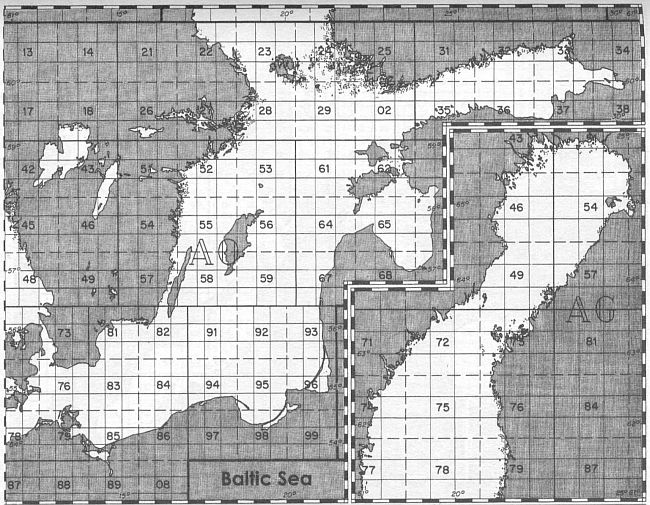
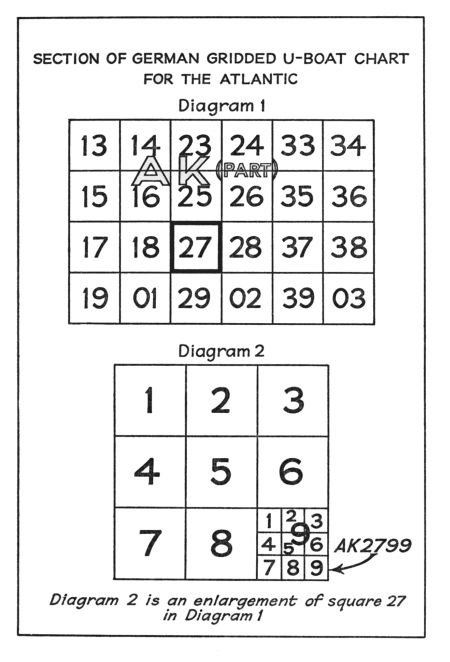
toiminta Suomen lahivesilla vuosina 1944-45). The article is in Finnish, with a summary in English. In 1944 the German submarines were sent to Finland for two purposes: To encourage Finns after the major Soviet offensive that started in June and to monitor and attack Soviet naval forces. At first three boats were sent to a demonstation trip end of June. U 481 sailed from Tallinn to Helsinki 23.6, continued east to Kotka 25.6., did not stay there but sailed across Gulf of Finland west from Suursaari and to Tallinn 26.6. U 748 and U 1193 arrived in Helsinki 27.6. and made the same trip. In the beginning of July it was not clear how many submarines should be sent to Finland and what would be their operational areas and targets. Finland had already its five submarines in the eastern Gulf of Finland and did not consider operations east from Suursaari barrage meaningful. When the Soviet offensive across Gulf of Vyborg started in the beginning of July, it was decided to station the German submarines to as far east as possible, close to the operating areas Trinidad north from Koivisto Sound and Bengalen east from Narvi island. The bases were mostly north and northeast from the Suursaari barrage. Some of them were also used by Finnish forces. The bases were selected so that there was a ready lane or deep water available and at least 5 m depth close to steep rocky shore for easy camouflage. It must be noted that the Soviet had almost total air superiority and submarines could operate surfaced only during nights. The operation of German submarines in the waters near Finland, which had begun in June 1944, ended on 17 March 1945 when the last boat, U 475, left the area. The article lists the following bases/locations:
|
|||||||||||||||||||||||||||||||||||||||||||||||||||||||||||||||||||||||||||||||||||||||||||||||||||||||||||||||||||||||||||||||||||||||||||||||||||||||||||||||||||||||||||||||||||||||||||||||||||||||||||||||||||||||||||||||||||||||||||||||||||||||||||||||||||||||||||||||||||||||||||||||||||||||||||||||||||||||||||||||||||||||||||||||||||||||||||||||||||||||||||||||||||||||||||||||||||||||||||||||||||||||||||||||||||||||||||||||||||||||||||||||||||||||||||||||||||||||||||||||||||


%20North%20Half-sr.jpg)








|
Many thanks to Jari Aromaa (Finnish Navy in World War II History) for providing much of this pertinent info... |
|
References - Bibliography: |
Kurzfassung Kriegstagesbuecher Deutscher U-Boote 1939- 1945, Band 1-14" by Herbert Ritschel  |
| U-Boats at War: Landings on Hostile Shores by Jak P. Mallmann Showell (2001) - ISBN 978-1557508645 |
| Der Seekrieg in den osteuropaischen Gewassern 1941-1945 by Jurg Meister (1958) Munich, Germany |
| U-Boat by Eberhard Rossler (2001) - ISBN 0-304-36120-8 |
| Chronology Of The War At Sea 1939-1945 by Jurgen Rohwer (2005) - ISBN 1-59114-119-2 |
| Hitler, Donitz, and the Baltic Sea: The Third Reich's Last Hope, 1944-1945 by David Grier - ISBN 978-1-59114-345-1
|
| U-boat Operations of the Second World War: Volume 1: Career Histories, U 1-U 510 by Kenneth Wynn (1998) - ISBN
978-1557508607 |
| U-Boat Operations of the Second World War, Vol. 2: Career Histories, U 511-UIT 25 by Kenneth Wynn (1998) - ISBN
978-557508621 |
| Military History Magazine No. 27, 2008 "Juhani Lievonen: "German submarine activity in the waters
close to Finland in 1944-45" - (Juhani Lievonen: Saksalaisten sukellusveneiden toiminta Suomen la"hivesilla"
vuosina 1944-45) - (information forwarded by Jari Aromaa) |
| Finnish Navy in World War II |
| Forum Marine Archiv |
| Axis History Forum |
| Photo collection of S. Mata |
| Unterseebootsbegleitschiff und Flottentender "SAAR" |
| German Marine Grid Converter |
|
I would welcome any additional info or corrections regarding the information presented - They may be submitted to - |

|
|
|


|
Ken Deshaies - Newton, New Hampshire - 2014 |
